

Healthy communication is a skill we can learn and practice throughout our lives. Communication is part of all our relationships – with friends, teachers, family members, partners, ourselves, colleagues and strangers. It’s a skill that always can be improved.
How can you tell the difference between healthy and unhealthy communication? Here are some examples of both to help you improve your communication skills which can lead to finding solutions to conflicts.
Healthy communication styles
How to have healthy communication
Unhealthy communication styles
Navigating Peer Pressure & Fear of Missing Out (FOMO)
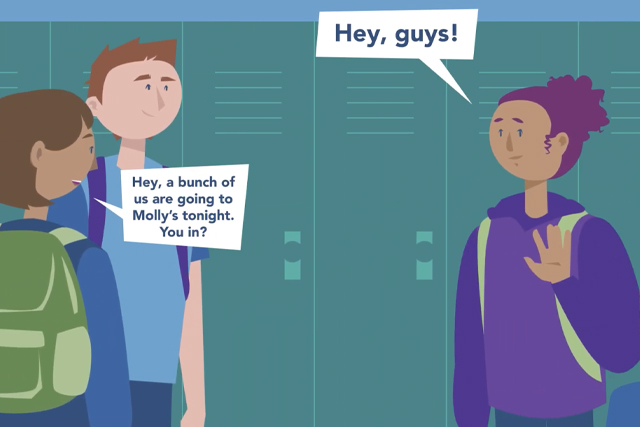
Peer pressure is another form of unhealthy communication. Pressure can feel direct and aggressive (“come on, just do it”) or indirect and subtle (feeling like you have to drink at a party because everyone else is). It's normal to be curious about risky behaviors like substance use, unsafe sexual activity, or skipping school. Each have potential consequences if you choose to partake, and it may also feel like you're missing out by saying no. Remember, you get to decide how to respond when you're feeling tempted or influenced by others or in a particular situation. Tackling anxious thoughts about risky behaviors and managing fear of missing out (FOMO) can help you feel confident in saying no to pressure and staying true to your values.

Additional bullying resources
Bullying can happen anywhere at any time to anyone. Bullying hurts everyone: the bully, the person being bullied and bystanders (people who witness someone being bullied.)
The effects of bullying can have serious, lasting consequences. For example, mental health issues, substance use and suicide can be linked to being bullied. In a 2019 Minnesota Student Survey, 19 percent of students report they were bullied at least once a week during the past 30 days. Students from lower income households and LGBTQIA+ students reported higher rates of bullying than did other students.
When you know what bullying is, it’s easier to stop it.